



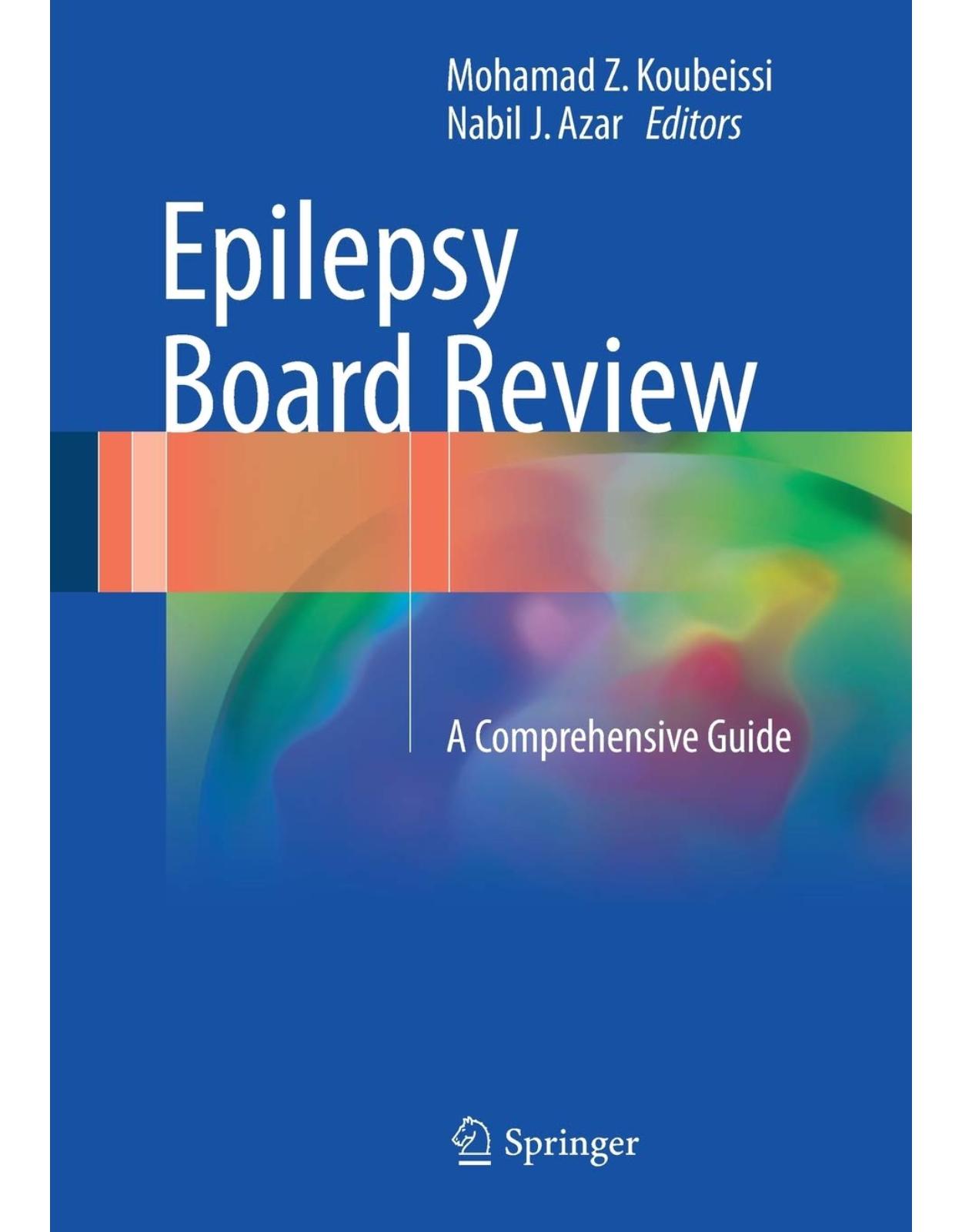
Epilepsy Board Review
Livrare gratis la comenzi peste 500 RON. Pentru celelalte comenzi livrarea este 20 RON.
Disponibilitate: La comanda in aproximativ 4-6 saptamani
Editura: Springer
Limba: Engleza
Nr. pagini: 388
Coperta: Paperback
Dimensiuni: 17.81 x 2.24 x 25.4 cm
An aparitie: 28-06-17
Description:
This concise text mirrors the content of the Epilepsy Board as distributed by the American Board of Psychiatry and Neurology. Epilepsy diagnosis, classification and treatment are thoroughly covered, along with seizure classification, epidemiology, normal and abnormal EEG, and treatment with antiepileptic medications and other modalities. Formatted with multiple choice questions and explanations, this complete resource will prepare physicians and students for the Epilepsy Board examination and provide the latest clinical approaches.
Table of contents:
The Normal EEG
1 Physiologic Basis of EEG and Epilepsy
Organization of the Cerebral Cortex
Neuronal Resting Membrane Potential, Postsynaptic Potentials, and Action Potential
EEG Generator
Wave Generation and Baseline Shifts
Focal Activity
Generalized Tonic–Clonic Activity
Spreading Depression
Substrates of Brain Rhythms
Further Reading
2 EEG Instrumentation, Montage, Polarity, and Localization
The Source of EEG
Recording the EEG
Montages
Acquiring, Filtering, and Displaying the EEG Signal
Digital EEG Acquisition, Processing, and Display
EEG and Patient Safety
EEG Artifacts
References
3 Normal EEG Variants and Artifacts
Physiologic EEG Artifacts
Non-physiologic Artifacts
References
4 Neonatal EEG and Neonatal Seizures
Technical Information that is Unique in Neonatal EEG and that May Affect Interpretation
Neonatal Montage
Timing of the Neonatal EEG
Normal Developmental Landmarks
PCA lessthan 30 Weeks of Gestation
Trace Discontinue
PCA Between 30 and 37 Weeks
Abnormalities in Voltage
Normal Graphoelements
Temporal Theta
PCA between 38 and 44 weeks.
Other Abnormal EEG Findings
Neonatal Seizures
Clinical Manifestations
Treatable Causes of Inborn Errors of Metabolism Presenting with Seizures and Encephalopathy
Pyridoxine-Dependent and Folinic Acid Responsive Seizures
Benign Neonatal Seizure Syndromes
Neonatal Non-epileptic Events
Special Features—Neonatal Ictal EEG Pattern
Neonatal Seizures Management
Long-term Outcome
References
Multiple Choice Questions for Part I
Sec3
Answers
The Abnormal EEG
5 Ictal and Interictal EEG
Interictal Epileptiform Discharges
Periodic Lateralized Epileptiform Discharges (PLEDs)
Temporal Intermittent Rhythmic Delta Activity (TIRDA)
Generalized IEDs
PhotoEpileptiform Discharges (Photoparoxysmal Response)
Ictal EEG
Ictal EEG in Focal Epilepsy
Ictal EEG in Generalized Epilepsy
Idiopathic Generalized Epilepsy
Symptomatic Generalized Epilepsies
References
6 EEG and Semiology in Generalized Epilepsies
Generalized Tonic–Clonic Seizures [1–4]
Absence Seizures [1, 6]
Myoclonic Seizures [7]
Clonic Seizures [8]
Tonic Seizures [9]
Atonic Seizures [10]
References
7 EEG and Semiology in Focal Epilepsy
Temporal Lobe Seizures
Extratemporal Lobe Seizures
Frontal Lobe Seizures
Parietal Lobe Seizures
Occipital Lobe Seizures
Insular Lobe Seizures
References
8 Status Epilepticus
Definition
Epidemiology
Classification
SE Clinical Stages
Pathophysiology of SE
Metabolic Consequences of SE (Table 8.6)
Management
Evaluations
Treatment
Refractory Status Epilepticus (RSE, Stage 3 SE)
SE Treatment Outcome
References
9 EEG in Encephalopathy and Coma
Intermittent Rhythmic Delta Activity (IRDA)
Triphasic Waves
Continuous High-Voltage Polymorphic Delta (PDA)
Generalized Periodic Epileptiform Discharges
Burst Suppression Pattern
Low-Voltage Slow Non-reactive EEG
Electrocerebral Inactivity
Spindle Coma
Alpha-Theta Coma
Beta Coma
Creutzfeldt–Jakob Disease (CJD)
Subacute Sclerosing Panencephalitis (SSPE)
References
Multiple Choice Questions for Part II
Sec1
Answers
Specific Epilepsy Syndromes
10 Electro-Clinical Syndromes by Age of Onset—Childhood, Adolescence, and Adult
Childhood Absence Epilepsy (CAE)
Epilepsy with Myoclonic Absences
Epilepsy with Myoclonic-Atonic Seizures
Lennox-Gestaut Syndrome (LGS)
Epileptic Encephalopathy with Continuous Spike and Wave During Sleep (CSWS)
Juvenile Absence Epilepsy (JAE)
Juvenile Myoclonic Epilepsy (JME)
Epilepsy with GTC Seizures Only
Progressive Myoclonic Epilepsy (PME)
Autosomal Dominant Nocturnal Frontal Lobe Epilepsy (ADNFLE)
Familial Temporal Lobe Epilepsy (Autosomal Dominant with Incomplete Penetrance)
Familial Focal Epilepsy with Variable Foci
Reflex Epilepsies
Gelastic Seizures—Hypothalamic Hamartoma (HH)
References
11 Seizures and Epilepsy in Early Life
Neonatal Period
Benign Familial Neonatal Seizures (BFNS) [1]
Early Infantile Epileptic Encephalopathy: EIEE (Ohtahara Syndrome) [2]
Early Myoclonic Encephalopathy: EME [2]
Infancy
Migrating Partial Seizures of Infancy [3]
Infantile Spasms [2]
Myoclonic Epilepsy in Infancy (MEI) [2]
Benign Infantile Seizures [4]
Myoclonic Encephalopathy in Nonprogressive Disorders
Childhood
Febrile Seizures (FS): The Basics [6]
Genetic Epilepsy and Febrile Seizures Plus (GEFS+) [7]
Dravet Syndrome (also called Severe Myoclonic Epilepsy of Infancy or SMEI)7
Benign Epilepsy with Centrotemporal Spikes BECTS (“Rolandic Epilepsy”) [8]
Panayiotopoulos Syndrome (Early Childhood Onset “Occipital” Epilepsy) [8]
Gastaut Syndrome (Late Childhood Onset “Occipital” Epilepsy) [8]
Rasmussen Syndrome
References
12 Imitators of Epilepsy
13 Genetic Analysis of Epilepsies
Background
Utility of Genetic Testing in Epilepsy
Clinical Application of Genetic Testing in Epilepsy
References
14 Epilepsy Secondary to Specific Mechanisms
Autoimmune Epilepsy
Brain Tumors and Epilepsy
Malformations of Cortical Development
Post-traumatic Epilepsy
Stroke and Epilepsy
Mesial Temporal Sclerosis
Vascular Malformations
References
Multiple Choice Questions for Part III
Sec1
Answers
Management of Epilepsy
15 Principles of Epilepsy Diagnosis and Management
Epidemiology
First Seizure
Other Factors Influencing AED Selection
Older (Classic) Versus Newer AEDs
FDA Indications
Reference Studies on AED Selection
Drug-Resistant Epilepsy and Polytherapy
Stopping AEDs When Seizure Freedom Achieved
References
16 Old Generation Antiepileptic Drugs
Phenobarbital
Primidone
Phenytoin
Fosphenytoin
Carbamazepine
Oxcarbazepine
Valproate/Divalproex
Ethosuximide
Benzodiazepines
References
17 New Generation Antiepileptic Drugs
Felbamate
Gabapentin
Lamotrigine
Topiramate
Tiagabine
Levetiracetam
Zonisamide
Pregabalin
Lacosamide
Vigabatrin
Rufinamide
Ezogabine (Known as Retigabine Outside the USA)
Perampanel
Eslicarbazepine
References
18 Dietary Therapies
History
Overview of Types of Dietary Therapies
Ketogenic Diet (“Classic”)
Medium-Chain Triglyceride (MCT) Diet
Modified Atkins Diet (MAD)
Low-Glycemic-Index Treatment (LGIT)
Patient Selection
Mechanisms
Duration
Complications
Outcomes
Modified Atkins Diet
Low-Glycemic-Index Treatment
Future Directions
Further Reading
References
19 Other Pharmacological Therapies: Investigational Antiepileptic Drugs, Animal Models of Epilepsy,
Investigational Antiepileptic Drugs
Animal Models of Epilepsy
Hormonal and Immunological Treatment
References
20 Epilepsy Management in Special Populations
Epilepsy in Individuals with Intellectual and Developmental Disability
Epilepsy in the Elderly
Women with Epilepsy
References
Multiple Choice Questions for Part IV
Sec1
Answers
Presurgical Evaluation and Epilepsy Surgery
21 Neuroimaging in Epilepsy
Computed Axial Tomography
Magnetic Resonance Imaging (MRI)
Positron Emission Tomography (PET)
Subtraction Ictal SPECT Co-registered to MRI (SISCOM)
Magnetoencephalogram (MEG)
Diffusion-Weighted Imaging (DWI)
Diffusion Tensor Imaging (DTI)
MR Spectroscopy (MRS)
Functional MRI (F-MRI)
References
22 Neuropsychological Evaluation in Epilepsy
Neuropsychology Principles
Purpose of a Neuropsychological Evaluation
Components of a Neuropsychological Evaluation
Neuropsychological Findings by Domain in Epilepsy
Overview
Intelligence
Language
Memory
Attention/Executive Functions
Visual/Spatial
Psychomotor/Reaction Time
Academic Functioning
Psychosocial
Mapping Cognition
References/Recommendations for Further Reading
23 Magnetoencephalography and Magnetic Source Modeling
Introduction
MEG History
MEG Equipment and Recording
Magnetic Source Modeling
Source Modeling of Epileptic Activity and Evoked Responses
The Role of MEG in Presurgical Evaluations
Some Limitations of Current Clinical MEG Methodologies
Summary
References
24 Vagus Nerve Stimulation and Other Neuromodulation
Approved Indications of VNS Therapy
Refractory Epilepsy—Definition
Clinical Indications of VNS
Vagus Nerve Anatomy and Lead Placement
Electrode Polarity and Pulse Stimulus
Initial Clinical Trials—Overview
Clinical Trials: Efficacy and Safety
Stimulation Parameters and Safety
Suggested Initial Dosing Settings
Adverse Effects
Precautions
Optimizing Parameters and Alleviating Side Effects
Optimizing Results
Managing Side Effects
VNS Warning with MRI
Mechanism(s) of Action of VNS
Investigational Neurostimulators
Responsive Cortical Stimulation
Electrical Stimulation of the Anterior Nucleus of the Thalamus (SANTE Trial)
References
25 Epilepsy Surgery Assessment and Testing
Refractory (Drug Resistant, Intractable, Pharmacoresistant) Epilepsy
Treatment Options for Refractory Partial Epilepsy
Presurgical Evaluation
Neuropsychology
Intracarotid Amobarbital Procedure (Wada Test)
Case Presentation #1
Is Epilepsy Surgery Warranted?
Early Randomized Surgical Epilepsy Trial (ERSET)
Surgical Methods
Temporal lobe surgery
Temporal lobectomy
Selective Amygdalohippocampectomy (SAH)
Outcome Following Temporal Lobe Surgery
Long-term Surgery—MTLE and MTS
Standard Anterior Temporal Lobectomy
Temporal Lobectomy—Inferior Temporal Approach
Selective Amygdalohippocampectomy
Neurocognitive Deficits and Risk Factors Following ATL
Standard Versus Selective Temporal Lobe Surgery
Right Versus Left Temporal Lobectomy (RTL vs. LTL)
Case Presentation #2
Case Presentation #3
Outcome Following Nonlesional Partial Epilepsy Surgery
Outcome Following ATL in Nonlesional TLE Surgery
Case Presentation #4
Outcome Following Frontal Lobe Epilepsy Surgery
Supplementary Motor Area (SMA) Seizures
Multiple Subpial Transection (MST)
Overall Seizure-Free Outcome
Epilepsy Surgery—Long-term Outcome (≥5 Years)
Failed Epilepsy Surgery and Reoperation
Parietal Lobe Epilepsy
Occipital Lobe Epilepsy
Insular-Opercular Seizures
Epilepsy Surgery in Children
Extra-temporal Epilepsy Surgery in Children
Ictal Onset High-Frequency Oscillations
References
26 Procedures and Outcomes in Epilepsy Surgery
Symptoms
Noninvasive Evaluations
Invasive Evaluations
Testing the Brain—Functional Localization
Temporal Lobe Surgical Resections
Seizure Control
Other Outcomes
Other Surgical Resections
References
27 Quality of Life in Epilepsy
References
Websites—Further Reading
Multiple Choice Questions for Part V
Sec15
Answers
Index
| An aparitie | 28-06-17 |
| Autor | Mohamad Z. Koubeissi; Nabil J. Azar |
| Dimensiuni | 17.81 x 2.24 x 25.4 cm |
| Editura | Springer |
| Format | Paperback |
| ISBN | 9781493967728 |
| Limba | Engleza |
| Nr pag | 388 |



Clientii ebookshop.ro nu au adaugat inca opinii pentru acest produs. Fii primul care adauga o parere, folosind formularul de mai jos.