



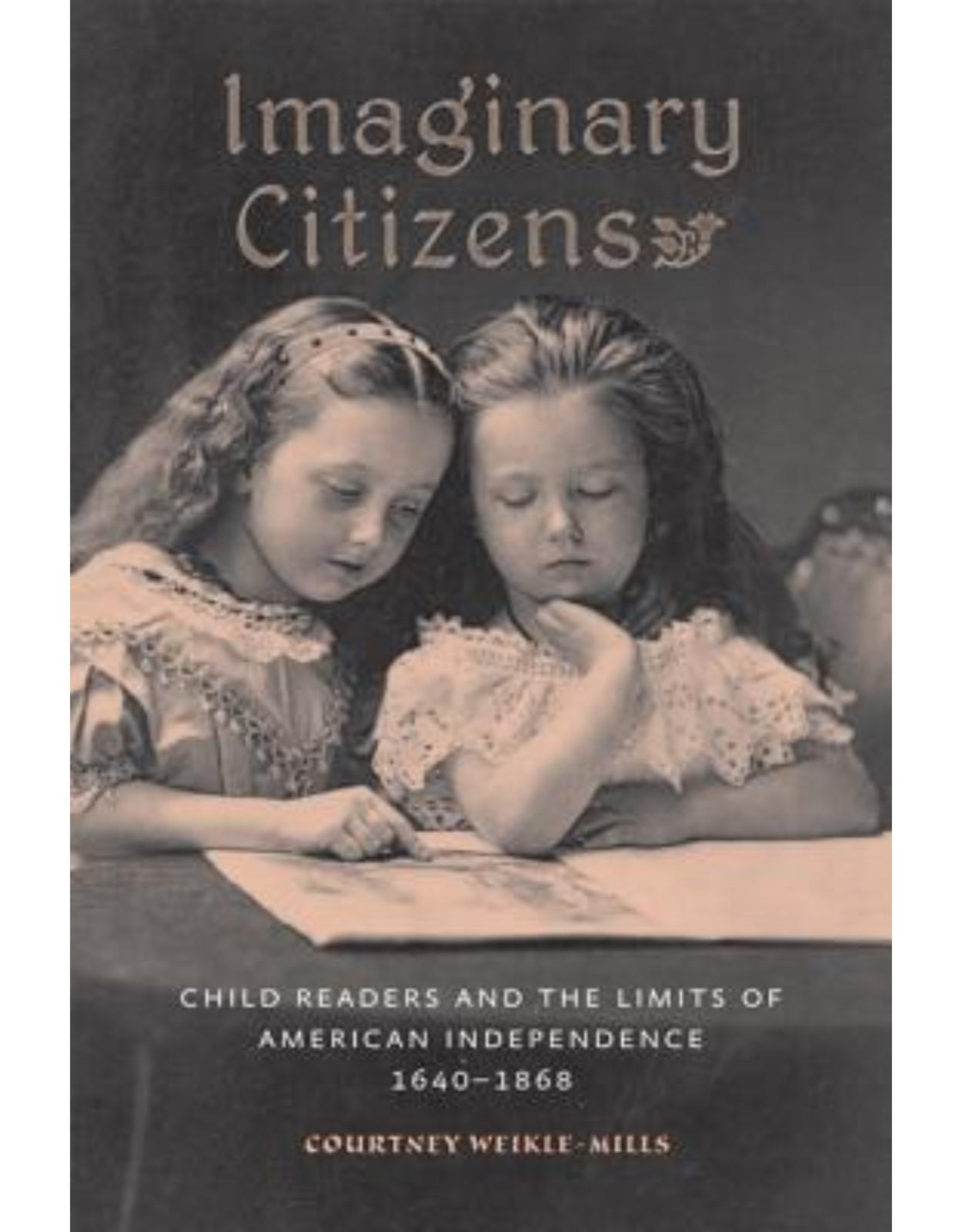
Imaginary Citizens. Child Readers and the Limits of American Independence, 1640-1868
361 Lei (TVA inclus)
Livrare gratis la comenzi peste 500 RON. Pentru celelalte comenzi livrarea este 20 RON.
Livrare gratis la comenzi peste 500 RON. Pentru celelalte comenzi livrarea este 20 RON.
From the colonial period to the end of the Civil War, children's books taught young Americans how to be good citizens and gave them the freedom, autonomy, and possibility to imagine themselves as such, despite the actual limitations of the law concerning child citizenship. "Imaginary Citizens" argues that the origin and evolution of the concept of citizenship in the United States centrally involved struggles over the meaning and boundaries of childhood.
Children were thought of as more than witnesses to American history and governance-they were representatives of "the people" in general. Early on, the parent-child relationship was used as an analogy for the relationship between England and America, and later, the president was equated to a father and the people to his children.
There was a backlash, however. In order to contest the patriarchal idea that all individuals owed childlike submission to their rulers, Americans looked to new theories of human development that limited political responsibility to those with a mature ability to reason. Yet Americans also based their concept of citizenship on the idea that all people are free and accountable at every age. Courtney Weikle-Mills discusses such characters as Goody Two-Shoes, Ichabod Crane, and Tom Sawyer in terms of how they reflect these conflicting ideals.
ebookshop
ebookshop
-
-
 19300 lei 16500 lei


Clientii ebookshop.ro nu au adaugat inca opinii pentru acest produs. Fii primul care adauga o parere, folosind formularul de mai jos.