



- 7%
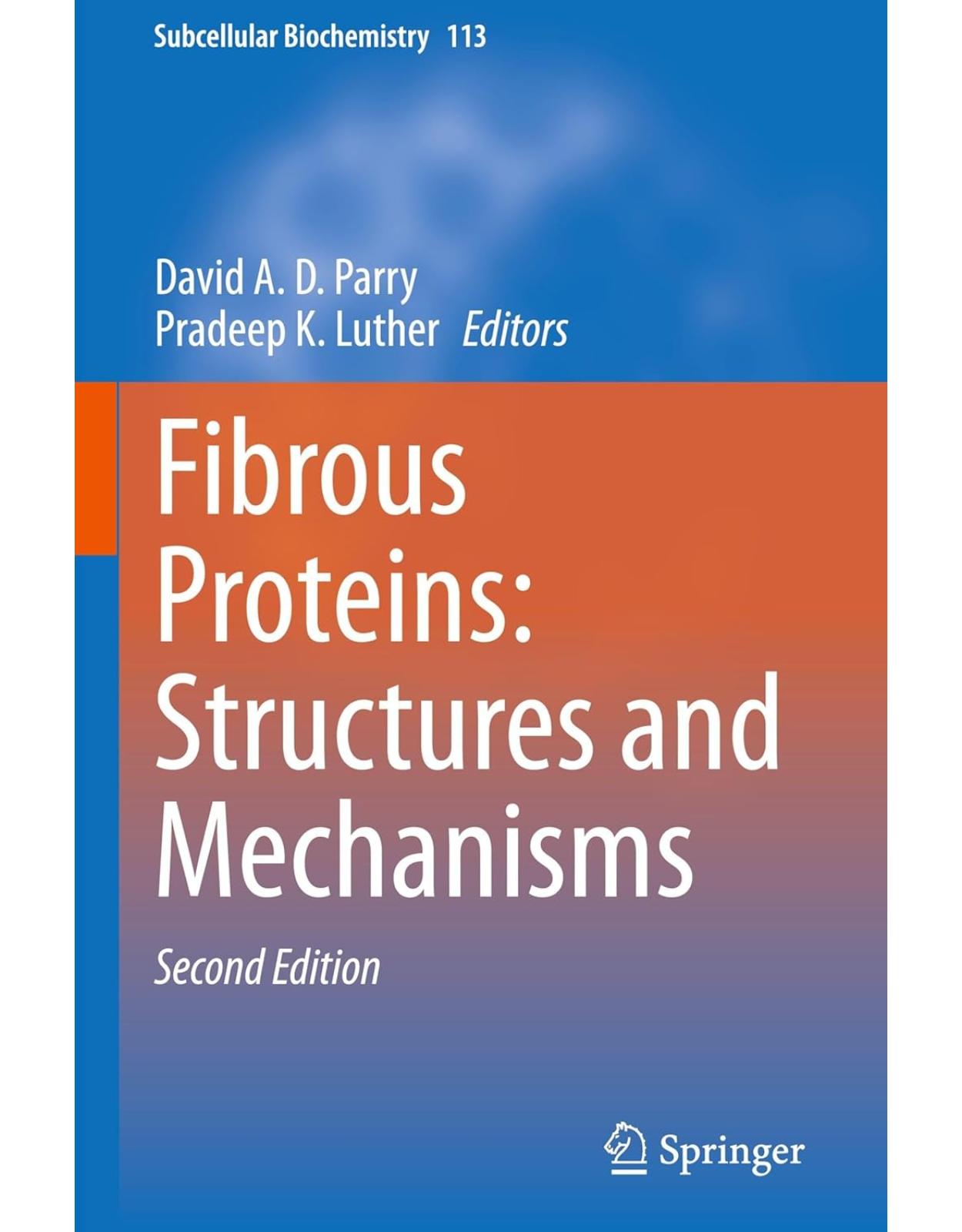
Fibrous Proteins: Structures and Mechanisms (Subcellular Biochemistry, 113)
1288 Lei 1200 Lei(TVA inclus)
Livrare gratis la comenzi peste 500 RON. Pentru celelalte comenzi livrarea este 20 RON.
Livrare gratis la comenzi peste 500 RON. Pentru celelalte comenzi livrarea este 20 RON.
Cod produs/ISBN: 9783032052728
Disponibilitate: La comanda in aproximativ 4-6 saptamani
Editura: Springer
Limba: Engleza
Nr. pagini: 558
Coperta: Hardcover
Dimensiuni: 16.41 x 3 x 23.85 cm
An aparitie: 2026
This book provides a unique discussion of the exciting advances made in the field of fibrous proteins over the past decade. The authors are world experts in their respective fields and each has provided the reader with a “state-of-the-art” summary of current thinking. As such, the book is clearly written and liberally illustrated. Those fibrous proteins described in detail include the constituents of muscle, keratin, connective tissue, silk, fibrin and biomaterials. The opening chapter by Wood discusses prediction of structure from sequence data and structural modelling, and in it he raises a very important topic – that of artificial intelligence and the increasing role that it will play in future years in protein research. In chapters 2-4 Luther, Lehman and Maeda cover muscle and concentrate on thick and thin filament structure and function. These highlight the recent advances made in cryo-electron microscope technology and image processing which have enabled new insights to be gained into the structure and working of the sarcomere and the effects that drugs designed to tackle disease have on this important motile element. In chapters 5-7, Parry considers the recent developments in the structures of the corneous alpha and beta proteins from the sauropsids (birds and reptiles), Medalia reveals the incredibly detailed structures of the intermediate filaments that can now be deduced from high-resolution cryo-electron microscopy, and Köster explains the mechanical properties of single intermediate filaments. Chapters 8-12 are devoted to important but diverse aspects of connective tissue. In particular, Bella reviews the marine collagens, a topic rarely discussed but one of increasing interest and relevance, and Norris reveals that the glycosylation of collagen plays an important role in fibril assembly. Ruberti discusses how collagen provides a tissue with its optimum mechanical attributes, and Fertala reviews collagen diseases and fibrosis. Canty-Laird completes this section with a fascinating chapter on collagen diseases. In Chapters 13 and 14 Weisel describes the important developments that have been made on the structure and function of fibrin, and Sutherland completes the exciting 60-year-old story of the coiled-coil structure of the silks of the bees, ants and wasps. The final two Chapters (15 and 16) are devoted to the designability of a-helical protein filaments (Conticello) and functional plasticity through amyloid polymorphism (Landau). This second edition of what proved to be a highly influential book when it was first published in 2017 will be a valuable resource for senior scientists and postgraduate students in academic institutions as well as those working in the medical and industrial fields. It will also establish the basis for future activities in this area of research.
| An aparitie | 2026 |
| Autor | David A. D. Parry, Pradeep K. Luther |
| Dimensiuni | 16.41 x 3 x 23.85 cm |
| Editura | Springer |
| Format | Hardcover |
| ISBN | 9783032052728 |
| Limba | Engleza |
| Nr pag | 558 |






Clientii ebookshop.ro nu au adaugat inca opinii pentru acest produs. Fii primul care adauga o parere, folosind formularul de mai jos.