



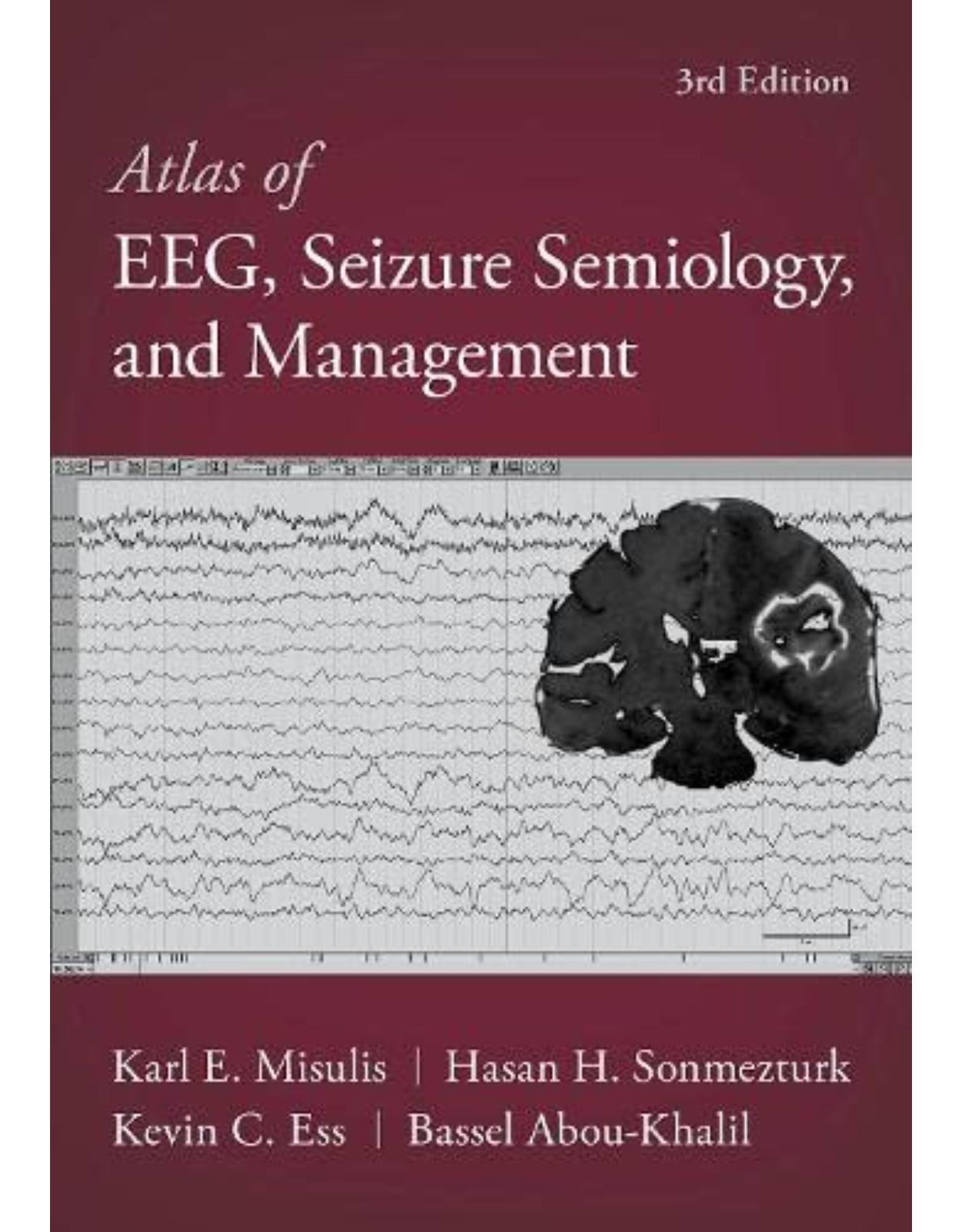
Atlas of EEG, Seizure Semiology, and Management
Livrare gratis la comenzi peste 500 RON. Pentru celelalte comenzi livrarea este 20 RON.
Disponibilitate: La comanda in aproximativ 4-6 saptamani
Editura: Oxford University Press
Limba: Engleza
Nr. pagini: 472
Coperta: Hardcover
Dimensiuni: 178 x 254 x 30 mm
An aparitie: 21 Jul 2022
Description:
Atlas of EEG, Seizure Semiology, and Management is a comprehensive yet concise textbook with a focus on practical use of EEG and clinical neurology in the diagnosis and management of epilepsy. It begins with the physiological foundation of EEG, physics and electronics of EEG generation and recording, and technical details of EEG performance. Major sections then discuss seizure and epilepsy diagnoses, normal and abnormal EEG patterns correlated with clinical scenarios, guides to differential diagnosis of seizures, guides to medical and nonmedical management, and lastly teaching case studies. For this edition, there is a separate pediatric EEG and epilepsy section, in addition to discussion of pediatric aspects throughout the rest of the text. Revisions and additions have been made to keep up with the rapid pace of advancement in EEG and epilepsy.This new third edition is authored and edited by four senior faculty of Vanderbilt University Hospital and Vanderbilt Children's Hospital, all trained and board certified in EEG and Clinical Neurophysiology. These experts use their daily experience treating epilepsy in a busy academic medical center to provide a robust core of EEG and epilepsy knowledge to healthcare professionals who diagnose and manage epilepsy, and who are seeking to develop and enhance their knowledge of EEG performance and interpretation.New in this edition:· Compares the new epilepsy classification schemes with the old· Updated status epilepticus management, with new tables and flowcharts· New interpretations for a variety of EEG patterns, some of which have controversial implications
Table of Contents:
1. Part 1 Introduction to EEG
2. 1.1 Overview of Seizures and Epilepsy
3. Seizures and Epilepsy
4. Classifications
5. 1.2 Role of EEG in Diagnosis and Management
6. Routine EEG
7. Video-EEG Monitoring
8. Intracranial Techniques
9. Part 2 Basic Science of EEG
10. 2.1 Physiology
11. Membrane Physiology
12. Resting Membrane Potential
13. Postsynaptic Potentials
14. Action Potential Generation and Termination
15. Action Potential Propagation
16. 2.2 Electronics
17. Circuit Elements
18. Amplifiers
19. Circuit Laws
20. Computers and Digital Data
21. Signal Processing
22. Filters
23. Electrodes
24. Electrode Theory
25. Digital Displays
26. 2.3 Generators of EEG Activity
27. Generators of Normal EEG Activity
28. Generation of Abnormal EEG Activity
29. Part 3 Seizure Semiology and Classification
30. 3.1 Definitions
31. 3.2 Overview of Seizure Semiology
32. Motor Manifestations
33. Sensory Phenomena
34. Autonomic Manifestations
35. Experiential Phenomena
36. 3.3 Seizure Classification
37. 3.4 Seizure Semiology by Seizure Type and Seizure Localization
38. Focal Onset Seizures by Type
39. Generalized-Onset Seizures
40. Unknown-Onset Seizures
41. Part 4 Epilepsy Classification and Epileptic Syndromes
42. 4.1 Epilepsy Classification
43. Old Classification
44. New Classification
45. 4.2 Select Epilepsy Syndromes Seen in Adulthood
46. Generalized Epilepsy Syndromes: Idiopathic Generalized Epilepsies
47. Focal Epilepsy Syndromes
48. Epilepsy Syndromes with Both Focal and Generalized Seizures
49. Part 5 Clinical EEG
50. 5.1 Terminology and Definitions
51. 5.2 EEG Basics
52. Performance
53. EEG Analysis
54. Video-EEG and Long-Term EEG Monitoring
55. 5.3 Normal EEG
56. Overview
57. Normal Adult EEG
58. Variants and Transients
59. SREDA
60. Noncerebral Potentials
61. 5.4 Abnormal Nonepileptiform EEG
62. Overview
63. Slow Abnormalities
64. Amplitude Abnormalities
65. Periodic Patterns
66. Coma and Electrocerebral Silence
67. Critical Care Terminology
68. 5.5 Abnormal EEG in Epilepsy: Interictal Epileptiform and Ictal Discharges
69. EEG Role in the Diagnosis and Management of Epilepsy
70. Focal Versus Generalized EEG Patterns
71. Patterns of EEG Activity in Focal Epilepsy
72. Patterns of EEG Activity in Generalized Epilepsy
73. 5.6 Status Epilepticus
74. Epidemiology
75. Definition and Classification
76. Convulsive Status Epilepticus
77. Nonconvulsive Status Epilepticus
78. 5.7 Advanced Techniques
79. Intraoperative Electrocorticography (ECoG)
80. Critical Care Monitoring
81. Encephalopathy in Hospitalized Patients
82. Quantitative EEG
83. Intraoperative Monitoring
84. Part 6 Pediatric EEG
85. 6.1 Normal Pediatric EEG
86. Overview
87. Neonatal EEG Methodology
88. Physiological State of Neonates
89. Normal Neonatal EEG
90. Maturation of the Posterior Dominant Rhythm
91. Posterior Slow Waves of Youth
92. Hyperventilation
93. Drowsiness
94. Sleep Patterns
95. 6.2 Abnormal Pediatric EEG
96. Neonatal EEG Abnormalities
97. Maturation
98. Epileptiform Activity
99. 6.3 Pediatric Seizures
100. Neonatal Seizures
101. Epileptic Encephalopathy
102. Absence Epilepsy
103. Juvenile Myoclonic Epilepsy
104. Self-Limited Focal Epilepsies of Childhood
105. Landau-Kleffner Syndrome (LKS)
106. Continuous Spike-and-Wave During Sleep
107. Atypical Benign Partial Epilepsy
108. Febrile Seizures
109. Part 7 Differential Diagnosis
110. 7.1 Overview
111. 7.2 Psychogenic Nonepileptic Events
112. Clinical Presentations
113. EEG Manifestations
114. 7.3 Syncope
115. Overview
116. Causes of Syncope
117. EEG Manifestations of Syncope
118. Differentiation of Syncope from Seizure Activity
119. 7.4 Other Disorders Mistaken for Seizures
120. Movement Disorders
121. Sleep Disorders
122. Behavioral Disorders
123. Breath-Holding Spells
124. Startle
125. Cough Syncope
126. Transient Ischemic Attack
127. Transient Global Amnesia
128. Peak Toxicity of ASMs
129. Drug-Induced Encephalopathy
130. Part 8 Seizure Management
131. 8.1 Management of Pediatric Seizures
132. Medical Management Issues in the Pediatric Population
133. Dietary Management in the Pediatric Population
134. Surgical Management in the Pediatric Population
135. Comorbidities in Pediatric Epilepsies
136. Prognosis in Pediatric Epilepsies
137. 8.2 Management of Adult Seizures/Epilepsy
138. If and When to Initiate Therapy
139. Considerations in Therapy
140. Dosing for First-Line Therapy
141. Drug-Level Monitoring
142. Second-Line Therapy
143. Drug Interactions
144. Success of ASM Therapy
145. Autoimmune Epilepsy
146. Discontinuation of Medical Therapy
147. 8.3 Management of Status Epilepticus
148. Treatment and Prognosis of Status Epilepticus
149. Medications Used for Status Epilepticus
150. 8.4 Nonmedical Treatment
151. Neurostimulation Techniques
152. Dietary Treatment of Epilepsy
153. 8.5 Surgical Treatment of Epilepsy
154. Historical Perspective
155. Refractory (Drug-Resistant) Epilepsy
156. Focal Epilepsies
157. Patient Example
158. Efficacy of Epilepsy Surgery
159. Epilepsy Surgery Workup
160. ASM Management After Surgery
161. 8.6 Comorbidities
162. Anxiety and Depression
163. Migraine
164. Substance Use and Abuse
165. Cardiovascular Disease
166. Cognitive Disturbance
167. Sleep Disorders
168. Social Difficulties
169. 8.7 Quality of Care Standards and Counseling
170. Quality of Care Standards
171. Counseling
172. 8.8 Medications A–Z
173. Brivaracetam (Briviact)
174. Cannabidiol (Epidiolex)
175. Carbamazepine (Tegretol, Tegretol XR, Equetro, Epitol, Carbatrol)
176. Cenobamate (Xcopri)
177. Clobazam (Onfi)
178. Clonazepam (Klonopin)
179. Eslicarbazepine Acetate (Aptiom)
180. Ethosuximide (Zarontin)
181. Felbamate (Felbatol)
182. Fenfluramine (Fintepla)
183. Gabapentin (Neurontin)
184. Lacosamide (Vimpat)
185. Lamotrigine (Lamictal)
186. Levetiracetam (Keppra)
187. Methsuximide (Celontin)
188. Oxcarbazepine (Trileptal)
189. Perampanel (Fycompa)
190. Phenobarbital (Luminal)
191. Phenytoin (Dilantin)
192. Pregabalin (Lyrica)
193. Primidone (Mysoline)
194. Rufinamide (Banzel)
195. Stiripentol (Diacomit)
196. Tiagabine (Gabitril)
197. Topiramate (Topamax)
198. Valproate (Depakote, Depakene, Depacon)
199. Vigabatrin (Sabril)
200. Zonisamide (Zonegran)
201. Part 9 Samples and Case Discussions
202. 9.1 Teaching Case Discussions with Dr. Abou-Khalil
203. Case 1
204. Case 2
205. Case 3
206. Case 4
207. Case 5
208. Case 6
209. Case 7
210. Case 8
211. Case 9
212. Case 10
213. 9.2 Pediatric Teaching Case Discussions with Dr. Ess
214. Pediatric Epilepsy Case 1
215. Pediatric Epilepsy Case 2
216. Pediatric Epilepsy Case 3
217. 9.3 Teaching Case Discussions with Dr. Sonmezturk
218. Case 1
219. Case 2
220. Case 3
221. 9.4 EEG Examples
222. Periodic Discharges with Anoxia
223. HSV Encephalitis
224. Wicket Spikes
225. Breach Rhythm
226. Creutzfeldt-Jakob Disease
227. Cough Syncope
228. Pentobarbital Coma
229. Parkinsonism with Tremor
230. Attenuation with Subdural Hematoma
231. Focal Attenuation in a Patient with Right Hemisphere Stroke
232. Hypsarrhythmia
233. Part 10 Appendix
234. 10.1 Abbreviations
235. Notes
236. Index
| An aparitie | 21 Jul 2022 |
| Autor | Bassel Abou-Khalil, Karl Edward Misulis, Hasan Sonmezturk, Kevin C. Ess |
| Dimensiuni | 178 x 254 x 30 mm |
| Editura | Oxford University Press |
| Format | Hardcover |
| ISBN | 9780197543023 |
| Limba | Engleza |
| Nr pag | 472 |




Clientii ebookshop.ro nu au adaugat inca opinii pentru acest produs. Fii primul care adauga o parere, folosind formularul de mai jos.